
aeris
A layover space designed as a restorative environment for pilots and flight attendants. It aims to offer a moment of pause between flights, where rest, rhythm, and recovery are prioritized. Rooted in the realities of aviation life, the design responds to disrupted circadian cycles, physical fatigue, and the need for stillness. Elevated on a flood-prone site near JFK, the structure bends to the wind, embraces the passing of monarch butterflies, and integrates rain gardens.
Design Studio - Spring 2025
Gokhan Kodalak
in the vicinity of JFK Airport, New York
Site

aeris starts with understanding time. The diagrams below examine circadian rhythm disruption and the irregular routines of pilots -- conditions that informed every design decision that followed.


Understanding biological misalignment was essential in designing spaces that help the body recover rather than resist fatigue.
The Site


The Protagonists

This diagram maps out the transmodal forces that shaped the project. The pilots and flight attendants — always in motion, always in transition. Their schedules are relentless, their rest is limited, and their bodies move between time zones without pause. The space is designed to meet that movement with care.

The building sits just 9–12 minutes from JFK, making it easily accessible between flights. Its aerodynamic form responds to the strong wind conditions on site — bending with pressure instead of resisting it. The structure lifts off the ground to protect against flooding, and beneath it, rain gardens manage runoff while becoming places of pause.
Within those gardens, milkweed grows. It’s planted for the monarch butterflies who migrate through this region each year — another kind of constant traveler. The butterflies only live for a few weeks, but they pass through this space with purpose. The rain gardens support both their journey and the landscape’s health.
Each element in the diagram reflects a protagonist — the traveler, the wind, the site, the butterfly — and the ways they move through and shape the architecture. Together, they form a system of care, rhythm, and responsiveness.

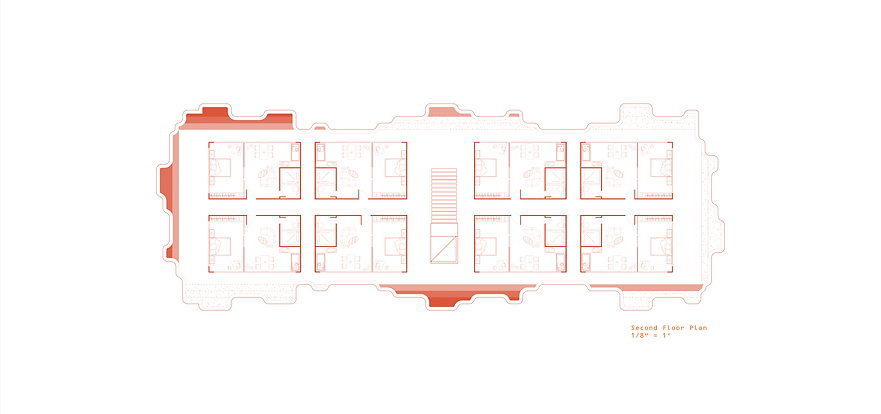


A space built for those who are always in between — pilots and flight attendants resting between journeys.
The structure bends to the wind, soft and wavy, controlling pressure instead of resisting it.
In its gaps, milkweed grows, offering a stop for monarch butterflies migrating through.
The materials — wood, concrete, and glass fiber reinforced concrete — are warm, grounded, and resilient, making the space feel held but never heavy.


